Proof
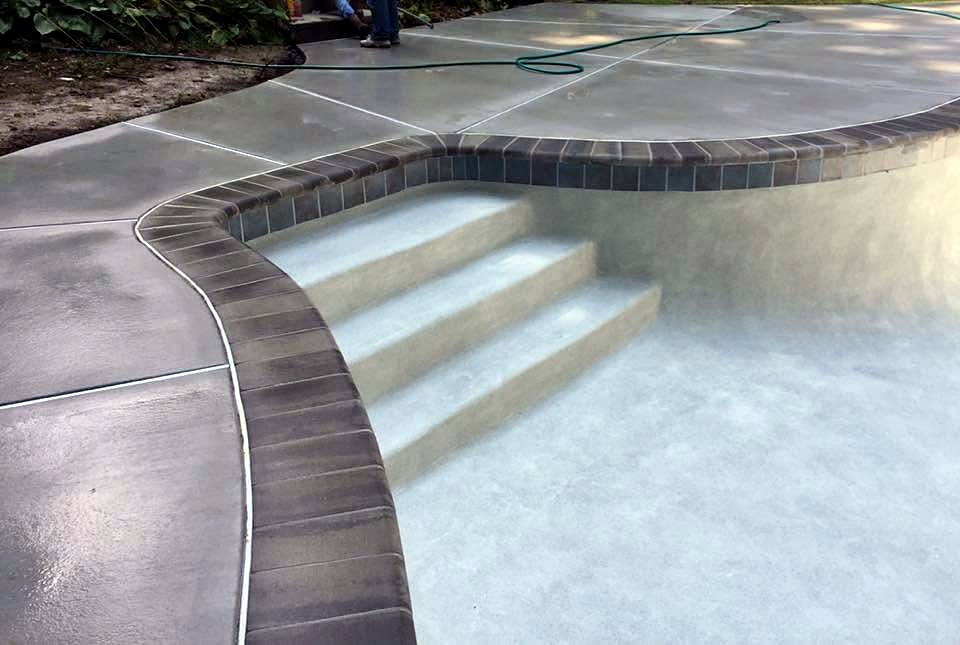
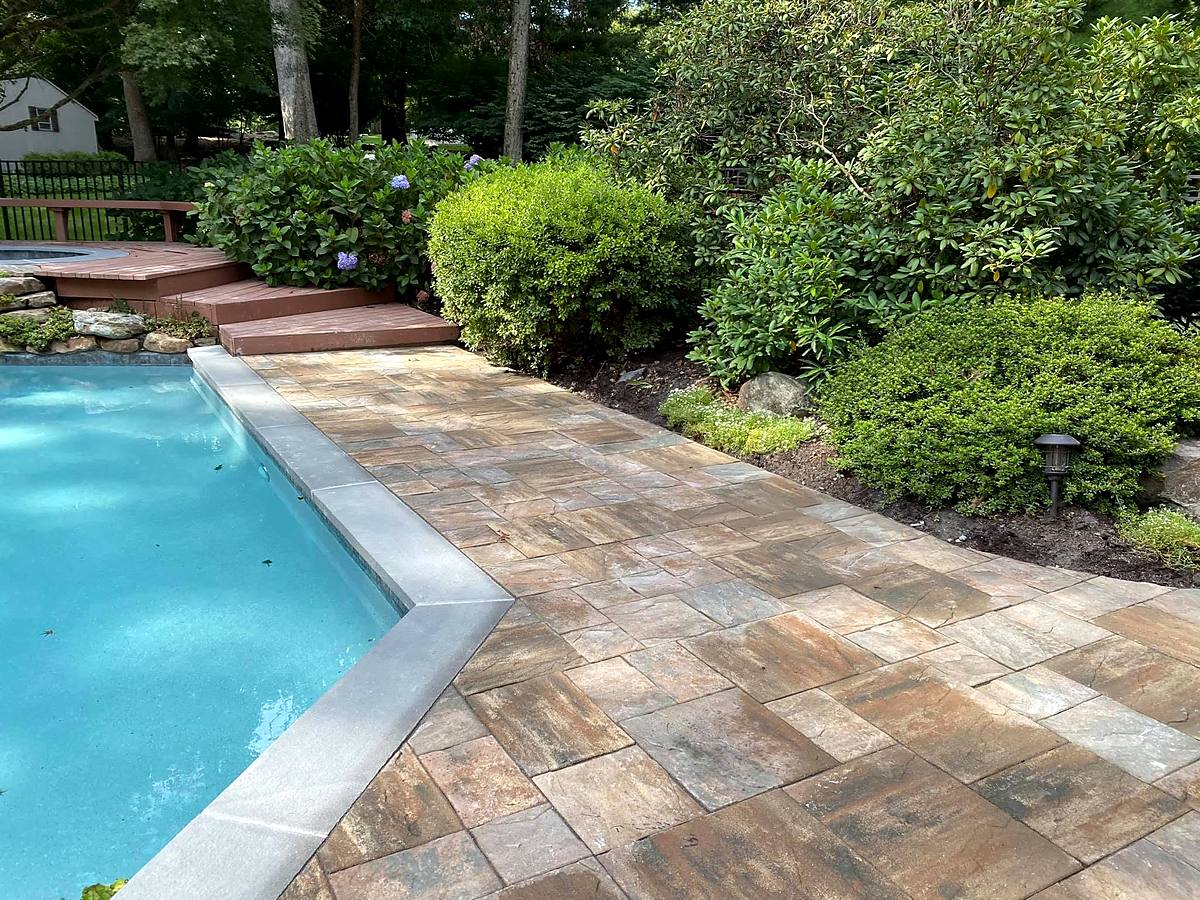
A clean line between pool and deck.
Before
After
Pool & spa — new plumbing, lighting, plaster, tile & natural stone coping
One renovation — drag to compare
What this is
Your pool shell and your pool deck are two separate slabs of concrete, and they move differently — with temperature, with moisture, with the ground under them. The expansion joint is the gap left between them on purpose, filled with a flexible sealant so the two can move without pushing on each other.
When that sealant cracks, sinks or goes missing, water runs straight down into the gap. In a Pennsylvania winter it freezes and expands, and the deck starts shoving the coping inward against the pool's beam. That's how you get loose coping, cracked waterline tile, and eventually a broken beam — a repair many times the cost of the joint.
A proper joint is a foam backer rod set to the right depth with a self-leveling polyurethane sealant over it, color-matched to your coping or deck. It's included in every tile and coping job we do, and it's a small standalone job when the rest of the pool is fine.
Warning signs
The sealant line is split, pulled away from one side, or sitting well below the surface.
Gaps where the old mastic has crumbled out entirely — an open path for water.
Coping stones tilting, loose, or pushed toward the pool.
Horizontal cracks along the waterline tile are the classic sign of deck pressure on the beam.
Proof
Options
Polyurethane sealants come in a range of colors, so the joint reads as a shadow line rather than a stripe.
How it goes
We check the joint the whole way around, and whether the coping or beam has already been affected.
Failed mastic and debris come out of the gap down to clean concrete.
Foam rod is set to the correct depth so the sealant has the right shape to stretch.
Self-leveling polyurethane goes in, color-matched, and tooled flush.
Keep foot traffic off it for a day; it's fully flexible within a few.
Questions
A well-installed polyurethane joint typically lasts five to ten years. Sun and pool chemistry shorten it; keeping it clean lengthens it.
Household caulk isn't flexible enough and won't self-level. Doing it properly is a small job for us and a frustrating one otherwise.
Always. Every tile and coping installation we do ends with a new expansion joint — the four-year warranty depends on it.
Then the joint alone won't fix it. We'll tell you honestly whether it needs resetting a few stones or a full coping replacement.
Where we do this
Montgomery and Chester counties are home turf, and we travel across Pennsylvania, New Jersey and Delaware for the right project.
Related services
Free estimate
Tell us how to reach you and we'll come take a look — small job or large, you'll get a clear written estimate.
Call or text — 610-316-1036
Email — PriceRightPools@gmail.com