Proof
The same shell, a new finish.
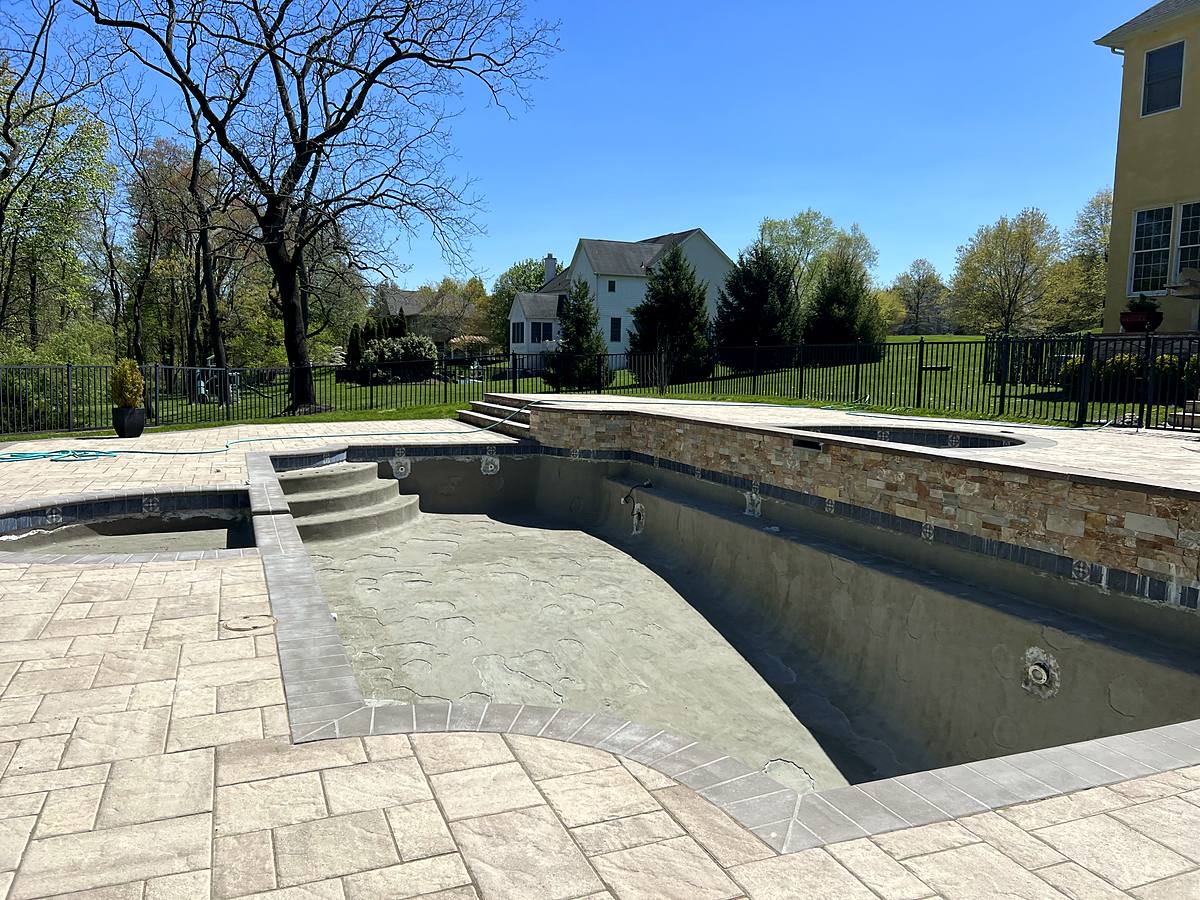
Before
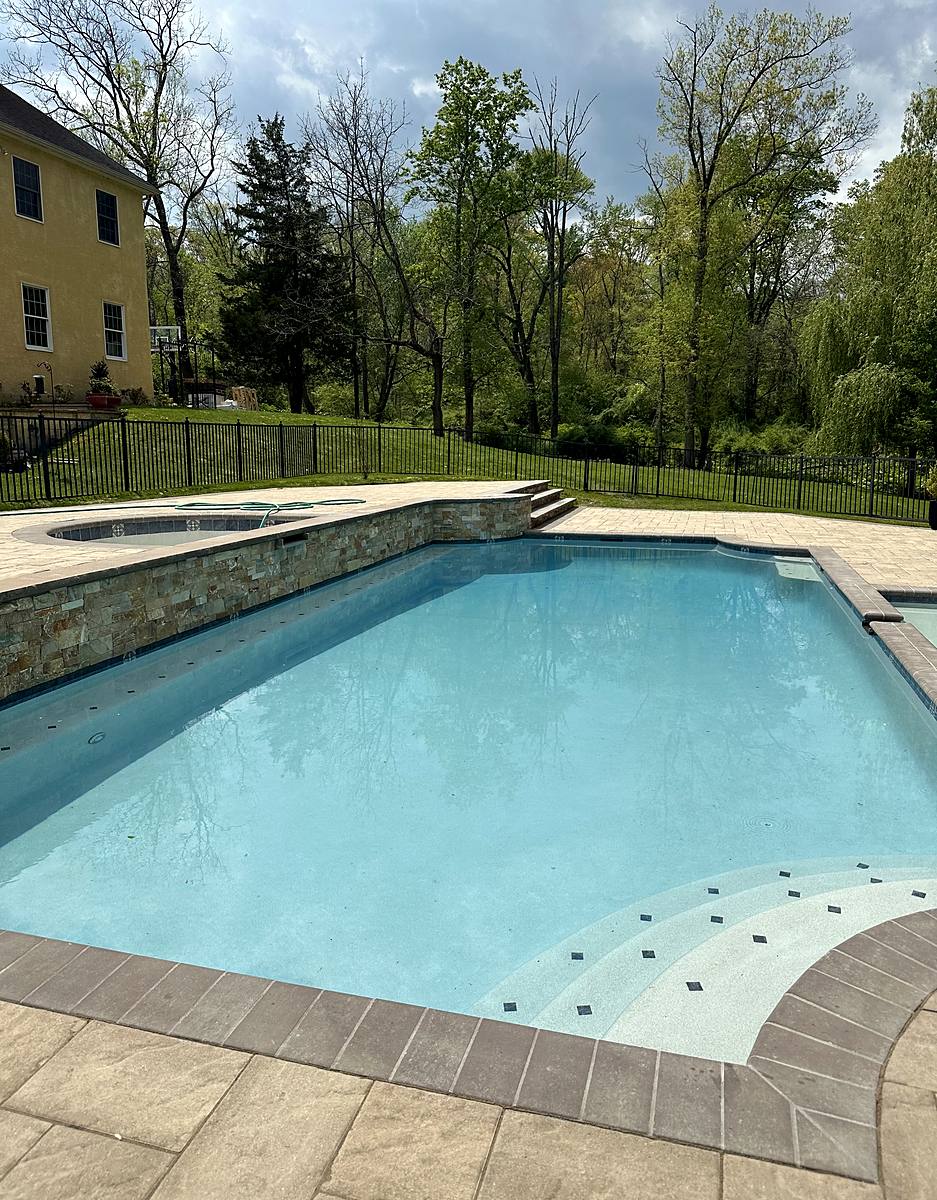
After
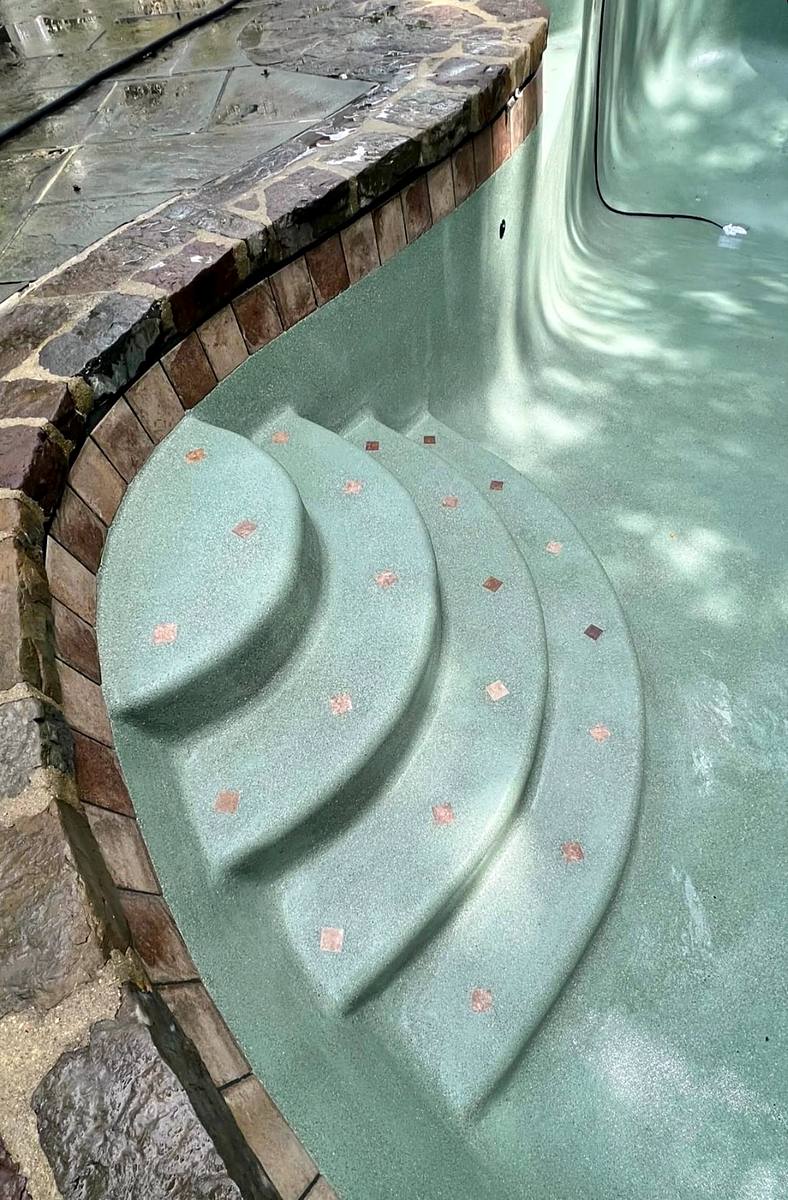
Hotel pool — replaster, tile & coping
One renovation — drag to compare
What this is
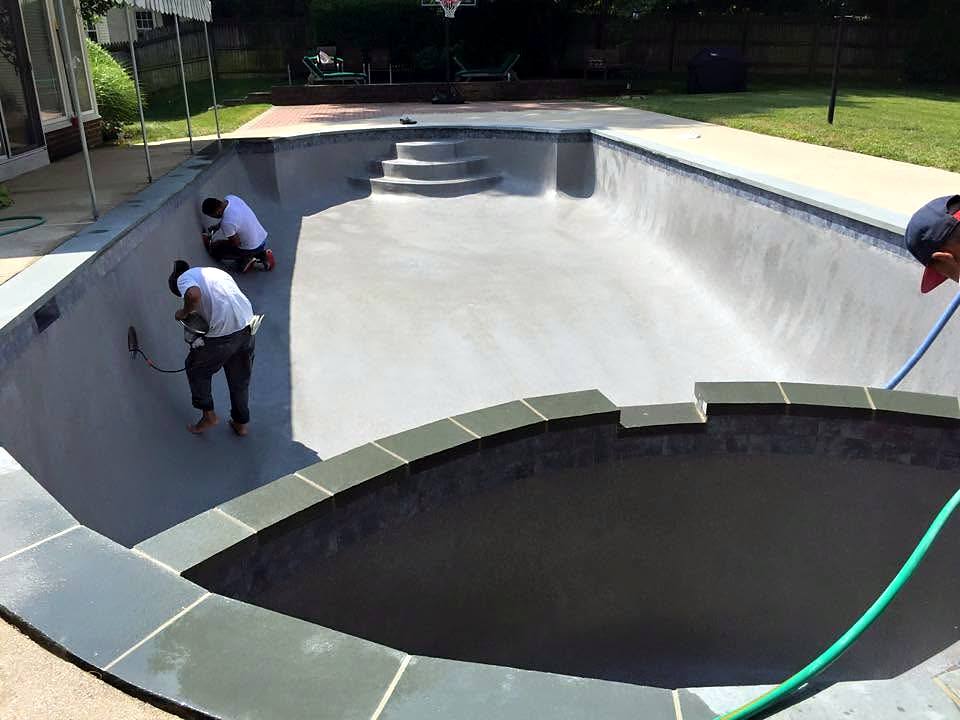
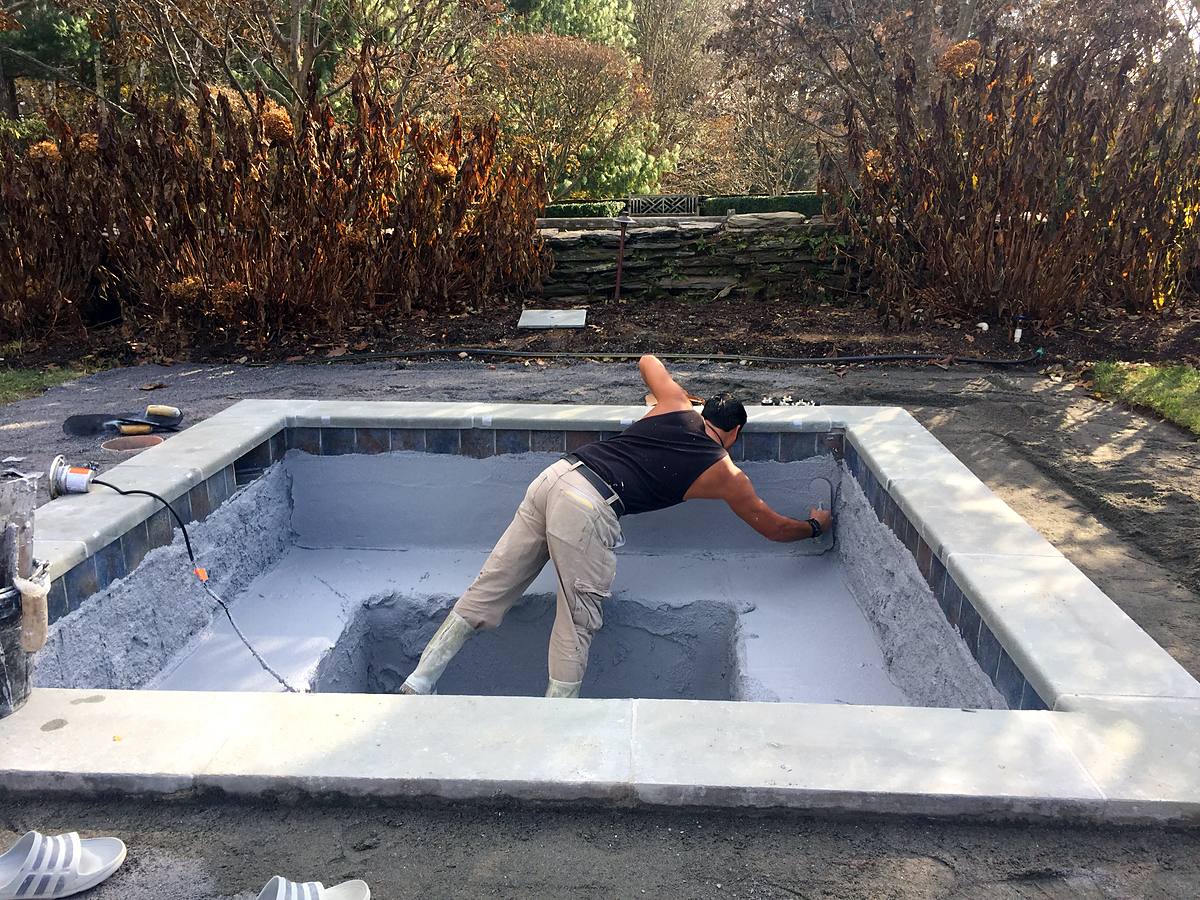
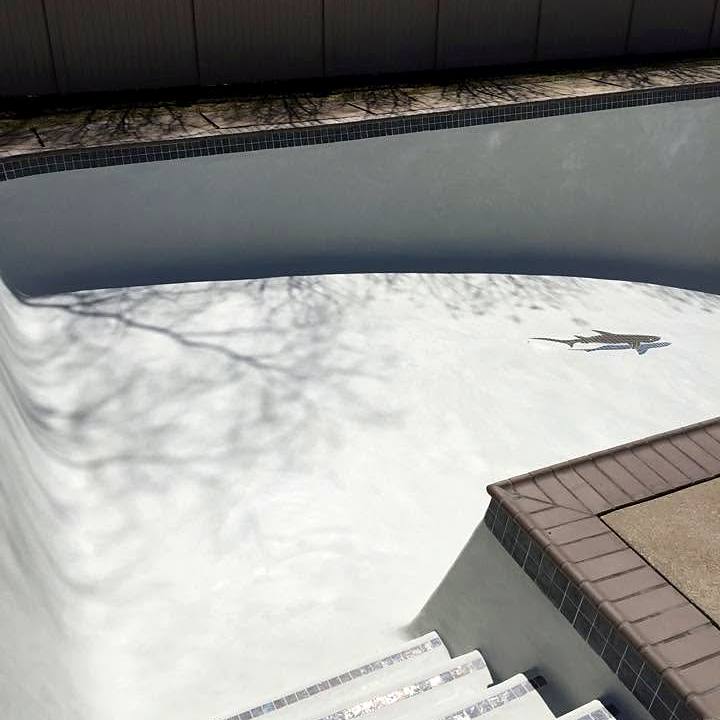
Under the water, a concrete pool is just a rough shell. The plaster is the smooth, watertight layer troweled over it — usually about half an inch thick — and it's what gives the water its color, keeps the shell sealed, and takes every bit of the chemistry you add all summer.
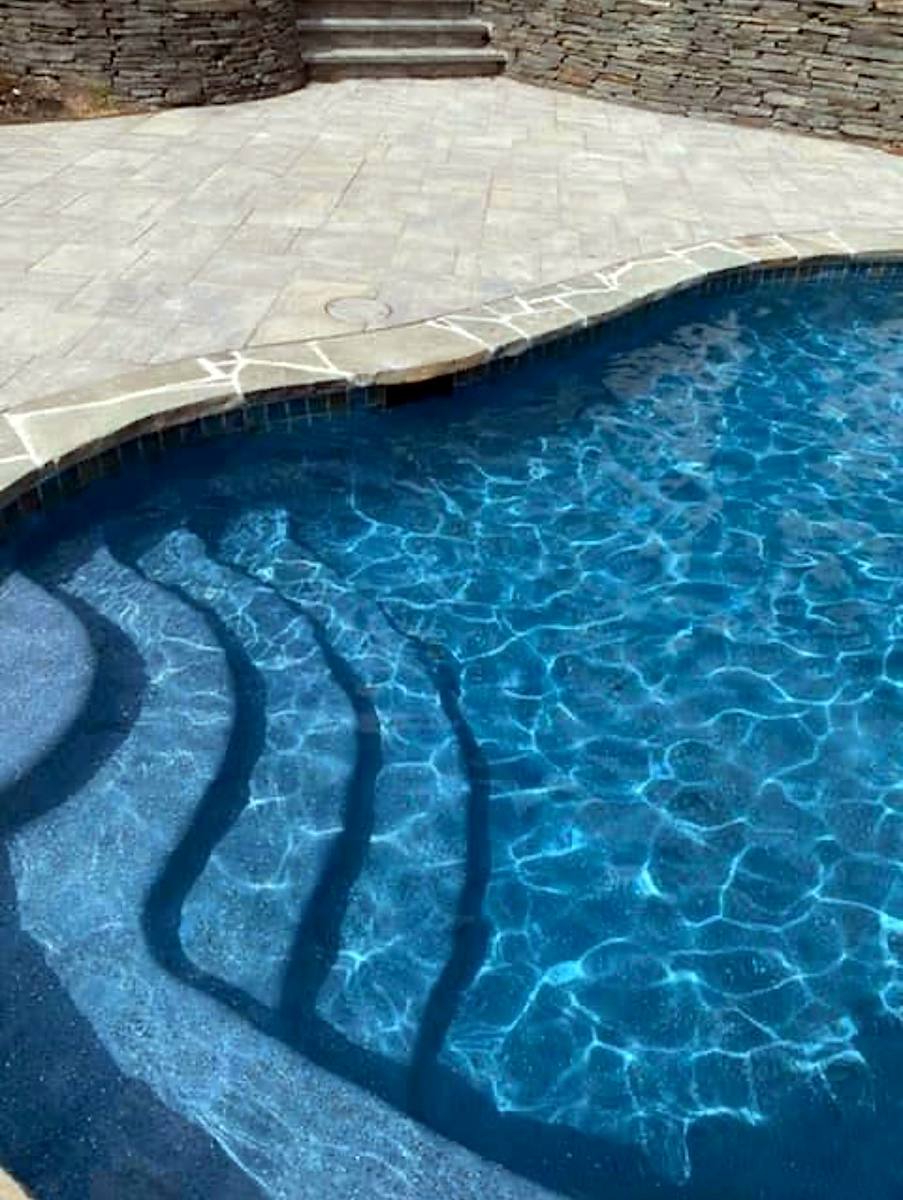
Traditional white plaster lasts roughly ten to fifteen years in our climate before it goes rough, stains and starts to delaminate. Quartz and pebble finishes are the same craft with a tougher aggregate mixed in: they resist chemistry and staining better, hide wear, and come in colors from light aqua to deep blue.
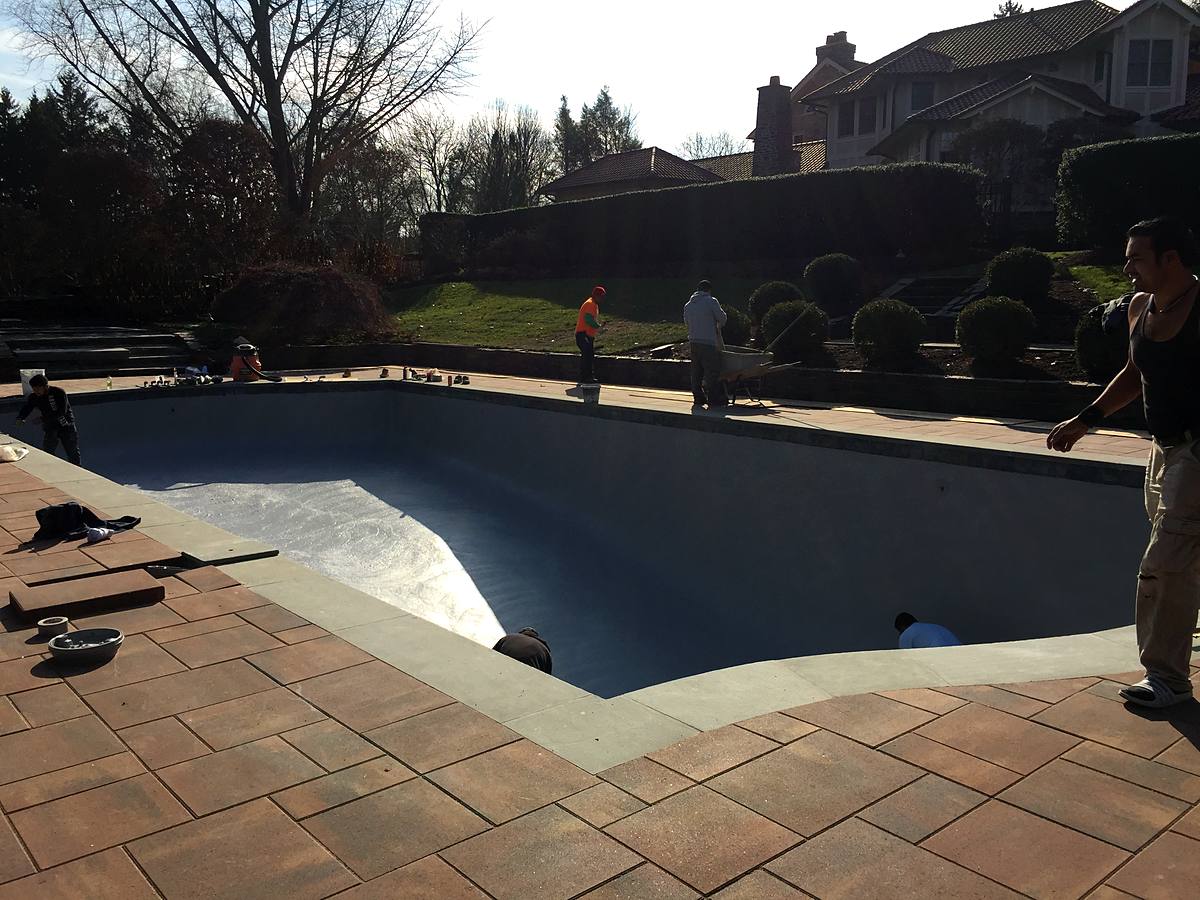
What separates a finish that lasts from one that fails early is the prep you never see: trimming around fixtures, an acid wash, and a bond coat that gives the new plaster something to grip. We don't skip it, and the two-year warranty is written on that basis.
Warning signs
The floor feels like sandpaper on your feet — the smooth top layer is gone.
Mottling, rust and copper stains that no chemistry brings back.
Patches flaking off, hollow spots, or plaster lifting near the steps.
A pool that needs the hose more than it used to may be leaking through the finish.
Proof
Finishes
Each finish sets the color of the water. We bring samples to the estimate so you can see them in your own sunlight.
How it goes
We check the existing finish and write an itemized estimate with finish options priced side by side.
The pool comes down, the old finish is roughed up or hydroblasted off, and every fixture gets trimmed around.
The shell is acid-washed and bond-coated so the new plaster grips the old concrete instead of sitting on it.
Fresh plastics go in and the finish is hand-troweled in one continuous pour.
The pool must fill within 24 hours — usually by tanker truck — and we walk you through the first weeks of care.
Questions
White plaster typically gives ten to fifteen years here; quartz and pebble finishes longer. How you balance the water in the first month matters more than anything.
Fresh plaster that dries out fades, check-cracks and can delaminate. That's why we schedule the water — often a tanker delivery — before we plaster, not after.
No. A replastered pool must not be drained during its first year — draining voids the plaster warranty. For closing, the water comes down only one or two inches below the tile line.
Yes. Plaster carries a two-year warranty that it will be watertight and won't peel, blister or delaminate.
If your tile band is on its way out, yes — one drain, one mobilization, one bill. If it's sound, we'll say so and leave it alone.
Where we do this
Montgomery and Chester counties are home turf, and we travel across Pennsylvania, New Jersey and Delaware for the right project.
Related services
Free estimate
Tell us how to reach you and we'll come take a look — you'll get a clear written estimate with finish options priced side by side.
Call or text — 610-316-1036
Email — PriceRightPools@gmail.com